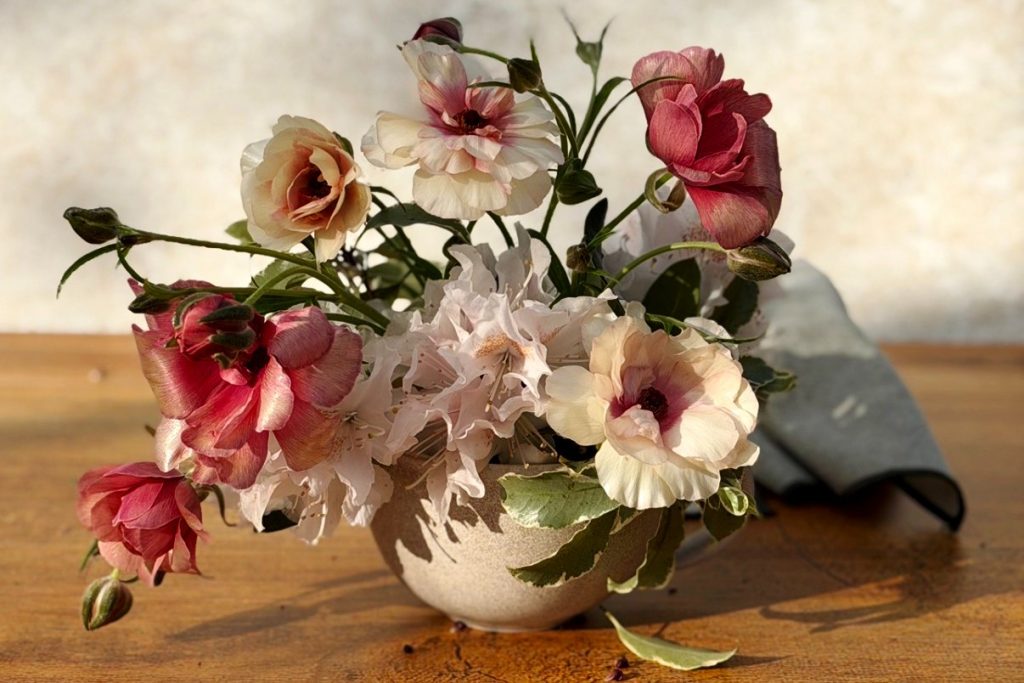
You don’t necessarily need a full hour or a weekend retreat to feel calmer. Here are three simple rituals you can weave into your day to gently bring your attention back to the present.
The trick is repetition: small rituals, done often, that gently signal to your nervous system that it’s safe to slow down. Here are three I come back to, and recommend to almost everyone who tells me their mind won’t switch off.
1. One slow cup
Once a day, make a cup of tea or coffee and do nothing else while you drink it. No phone, no scrolling, no “just checking” one thing. Feel the warmth of the cup, notice the taste, watch out the window if you can. It sounds almost too simple to matter. That’s exactly why it works: you’re practising the skill of single-tasking, which is the opposite of how most of our days are spent.
2. A pocket of flowers
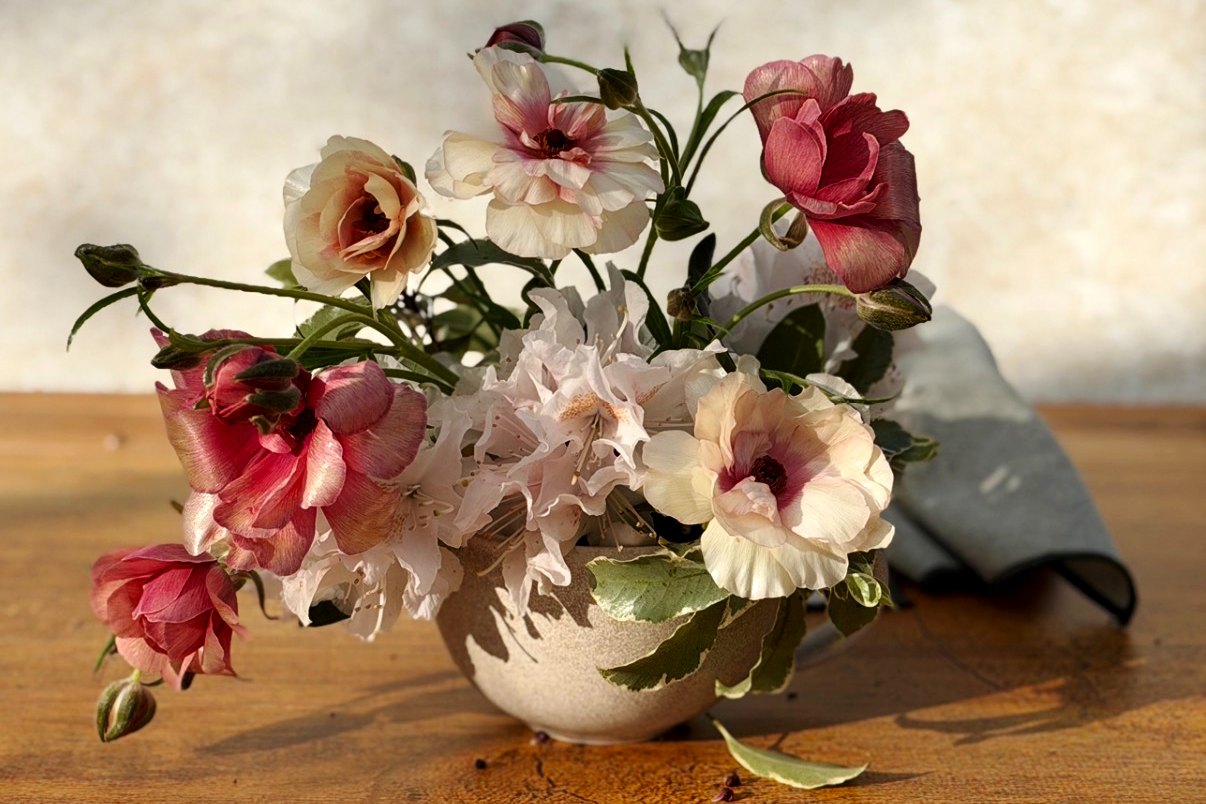
You don’t need a garden. A single stem in a jam jar on the windowsill is enough. Tending to something small and living – trimming a stem, changing the water, noticing it open over a few days – pulls your attention out of your head and into the present moment. This is where my own Tiny Rituals began, and it remains one of the gentlest ways I know to slow down.
Creative, hands-on rituals work because they give your busy mind a small, pleasant job – just enough focus to quiet the mental chatter, without any pressure to perform.
3. The three-breath pause
Before you start the car, open your laptop or walk through the front door, take three slow breaths. Make the out-breath a little longer than the in-breath. That longer exhale is a direct, physical nudge to the part of your nervous system responsible for calm. Three breaths won’t fix a hard day, but it creates a tiny gap between one thing and the next – and busy minds badly need those gaps.
Calm isn’t usually one big change. It’s a handful of small rituals, repeated often enough that your body starts to trust them.
Start with one
You don’t need all three. Pick the one that sounds most like you and try it for a week, at roughly the same time each day. The point isn’t to add another task to your list. It’s to give yourself permission, on purpose, to do a little less – and to notice how much that small permission can change a day.